
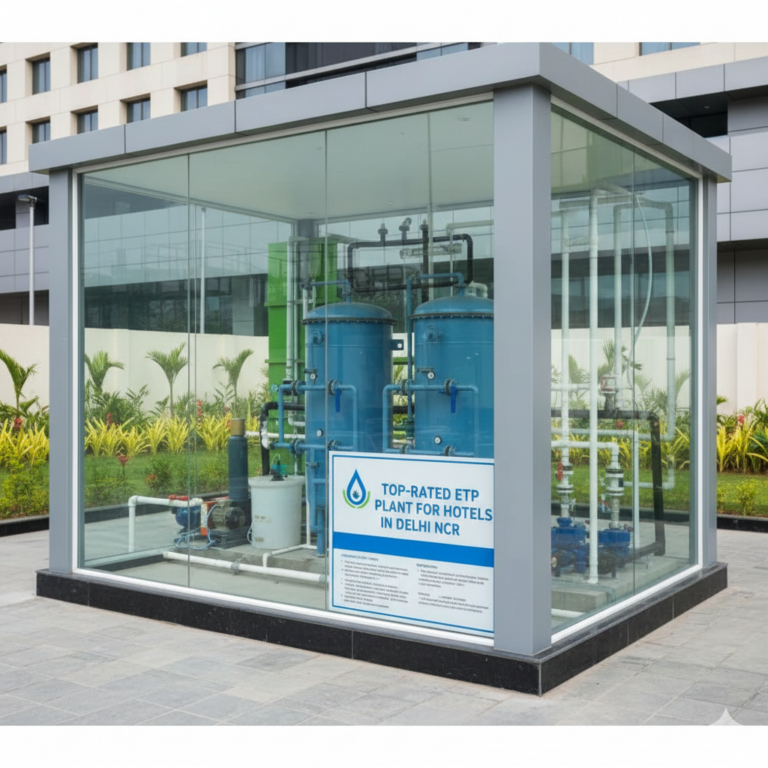
In the fast-growing hospitality sector of Delhi NCR, hotels are increasingly focusing on sustainability and regulatory compliance. Wastewater treatment is one area where hotels must pay careful attention. An ETP (Effluent Treatment Plant) helps manage used water responsibly, protects the environment, and ensures legal adherence.
In this article, we explore how hotels in Delhi NCR can choose the top-rated ETP plant that meets their needs. We also cover key benefits, features to look for, and common questions related to ETP plants.
What Is an ETP Plant?
An ETP plant is a system designed to treat wastewater generated in commercial and industrial settings before it is released into drains or reused. For hotels, wastewater comes from kitchens, laundry, bathrooms, dishwashing, and other daily operations.
Core Functions of an ETP Plant
- Removes solid waste
- Reduces harmful chemicals
- Eliminates suspended particles
- Treats odour and colour
- Makes water safe for discharge or reuse
Why ETP Plants Are Important for Hotels in Delhi NCR
Running a hotel involves managing large volumes of water. Without suitable treatment, wastewater can harm public health and violate environmental rules. Installing a top-rated ETP plant offers several important benefits:
1. Environmental Responsibility
Hotels generate wastewater that contains detergents, oils, organic matter, and other pollutants. An ETP plant processes this water safely and prevents contamination of local water bodies.
2. Legal Compliance
Delhi NCR has strict environmental regulations. Hotels must meet wastewater discharge standards set by local pollution control boards. Proper ETP systems help in meeting these norms.
3. Cost Savings Over Time
While installing an ETP plant incurs upfront costs, treated water can be reused for flushing, gardening, HVAC cooling, and cleaning. This reduces freshwater consumption and utility bills.
4. Enhanced Brand Reputation
Eco-friendly hotels attract clients who value sustainability. A well-maintained ETP plant also shows commitment to community welfare and ethical operation.
Key Features of a Top-Rated ETP Plant
Choosing the right system is essential. A top-rated ETP plant will have the following key features:
✔ High Treatment Efficiency
The plant should remove a high percentage of contaminants to meet discharge standards.
✔ Low Operational Cost
Efficient energy use and minimal chemical requirements help reduce running costs.
✔ Easy Maintenance
Hotels need systems that are simple to service, with accessible parts and support.
✔ Scalable Design
As hotel operations grow, the ETP plant should be expandable to handle additional load.
✔ Reliable After-Sales Support
Good technical support ensures uptime and faster issue resolution.
How ETP Plants Work – A Simple Overview
An ETP plant operates through a series of steps. Though designs vary, most include the following processes:
1. Pre-Treatment
Wastewater enters the plant and passes through screens or filters to remove large solids and debris.
2. Primary Sedimentation
The water is held in a tank where heavier particles settle to the bottom.
3. Biological Treatment
Microbes break down organic waste. This step reduces biochemical oxygen demand (BOD) and chemical oxygen demand (COD).
4. Secondary Clarification
Remaining solids settle out, and clearer water moves on for further treatment.
5. Disinfection
Water is disinfected to kill harmful bacteria and pathogens before discharge or reuse.
Choosing the Best ETP Plant for Hotels
Hotels should consider several factors before finalizing an ETP system:
📌 Size and Wastewater Volume
Estimate daily wastewater generation to choose the right capacity.
📌 Quality Standards
Ensure the system meets local environmental norms for discharge and reuse.
📌 Budget and ROI
Balance upfront investment with long-term savings through water reuse and lower penalties.
📌 Technical Expertise
Choose reliable engineers and technicians for installation and future service.
Common Types of ETP Plants Used in Hotels
Here are common options hotels may consider:
🔹 Activated Sludge Process
Good for medium to large hotels. Uses bacteria to degrade organic matter.
🔹 SBR (Sequencing Batch Reactor)
Operates in cycles. Suitable for varying wastewater loads.
🔹 MBBR (Moving Bed Biofilm Reactor)
Compact design with biofilm carriers that improve treatment efficiency.
🔹 Chemical Treatment Systems
Used when wastewater contains specific chemicals that biological systems cannot handle.
Benefits of Installing an ETP Plant in Your Hotel
Investing in the top-rated ETP plant brings several advantages:
🌿 Saves Freshwater
Treated water can be reused, reducing dependence on municipal supply.
💰 Cost-Effective
Lower water bills and reduced fines for environmental violation help save money.
🛡 Protects Public Health
Properly treated wastewater avoids disease-causing contaminants from spreading.
📈 Improves Sustainability Credentials
Hotels can showcase their environmental efforts to guests and partners.
Tips to Maintain Your ETP Plant
A well-maintained ETP plant runs longer and performs better. Here are simple tips:
- Create a regular maintenance schedule.
- Train housekeeping staff to prevent harmful waste from entering drains.
- Monitor key parameters like pH, BOD, and COD regularly.
- Replace worn-out parts promptly.
- Keep records of maintenance and test results.
Common Mistakes to Avoid with ETP Plants
Even the best systems can fail if mismanaged. Hotels should avoid:
❌ Ignoring periodic servicing
❌ Using harsh chemicals that disrupt biological processes
❌ Not monitoring performance data
❌ Choosing the wrong capacity plant
Correct planning and follow-up checks help prevent these issues.
Conclusion
For hotels in Delhi NCR, installing a top-rated ETP plant is not just a legal requirement — it’s a smart decision for sustainability, cost savings, and reputation. By understanding how these systems work and what features to prioritize, hotel owners can make informed choices that benefit their business and the environment.
Frequently Asked Questions (FAQ)
1. What size ETP plant does a hotel need?
The required size depends on the amount of wastewater generated daily. Hotels should calculate water use based on the number of guests, laundry loads, kitchen output, and cleaning activities. Consulting with an ETP expert helps determine the right capacity.
2. Is treated water from ETP safe for reuse?
Yes, treated water can be safe for specific uses like flushing, gardening, HVAC systems, and cleaning. However, it must meet regulatory standards before reuse.
3. How often should an ETP plant be serviced?
ETP plants should be serviced regularly, typically once every 3–6 months. Frequent checks help maintain performance and prevent breakdowns.
4. Can all wastewater from a hotel be treated by an ETP system?
Most hotel wastewater can be treated effectively. However, very high chemical loads or special contaminants may require additional treatment or a customized system.