
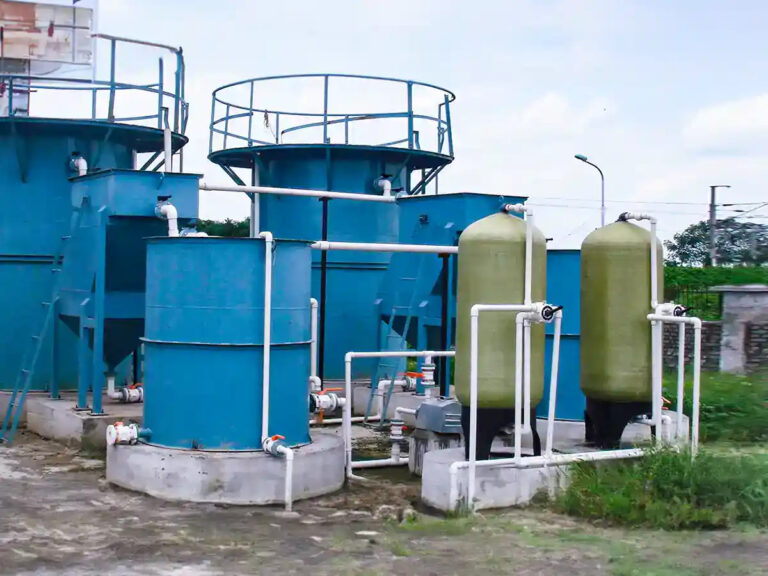
Understand the Role of STP & ETP in Circular Water Use
In a world facing increasing water scarcity, efficient water management has become more critical than ever. One of the most promising approaches is circular water use — a system that treats and reuses wastewater to minimize waste and maximize resource efficiency. Sewage Treatment Plants (STPs) and Effluent Treatment Plants (ETPs) are central to this transformation, turning waste into a valuable resource.
In a world facing increasing water scarcity, efficient water management has become more critical than ever. As freshwater resources dwindle and demand continues to rise, industries and municipalities are under pressure to adopt sustainable water solutions. One of the most promising and practical approaches to address this challenge is circular water use — a closed-loop system that focuses on treating and reusing wastewater instead of discharging it as waste. This not only conserves water but also reduces environmental pollution and operational costs.p> At the heart of circular water use are Sewage Treatment Plants (STPs) and Effluent Treatment Plants (ETPs). These systems play a pivotal role in converting wastewater into a reusable resource. STPs primarily handle domestic or municipal sewage, using a combination of physical, biological, and chemical processes to remove contaminants and make the water safe for non-potable reuse. This treated water can be used for purposes like irrigation, toilet flushing, landscaping, and even certain industrial applications. On the other hand, ETPs are designed to treat industrial wastewater, which often contains a complex mix of chemicals, heavy metals, and toxic substances. These plants ensure that the treated effluent meets regulatory standards before being discharged or reused. In many industries, the treated water is redirected back into the production process, reducing dependency on freshwater sources and supporting environmental compliance.
Together, STPs and ETPs enable industries and communities to transition from a linear “use-and-dispose” model to a circular water economy. By recovering water, nutrients, and sometimes even energy from waste, these systems not only support sustainability goals but also drive long-term operational efficiency. As the global focus on water conservation intensifies, integrating STPs and ETPs into water management strategies is no longer optional — it is essential for a resilient and resource-efficient future.